



Brazil: beaches, rainforest and vibrant cities
Brazil covers almost half of South America, offering Rio de Janeiro's mountains and beaches, the Amazon and Pantanal, colonial towns and a music and food culture all its own.
Brazil is the largest country in South America and the only Portuguese-speaking one, and its size shapes every trip. Within its borders are a long Atlantic coastline, the greater part of the Amazon rainforest, the vast Pantanal wetland, highland plateaus and some of the continent’s largest cities. A first visit works best when it focuses on a handful of regions linked by domestic flights.
Cities and culture
Rio de Janeiro is the classic introduction, with its granite peaks, forested hills and city beaches, recognised by UNESCO as a cultural landscape. São Paulo, the country’s largest city, is a hub for food, art and business. In the north-east, Salvador’s historic centre, the Pelourinho, is a UNESCO-listed showcase of colonial architecture and Afro-Brazilian heritage, expressed in music, capoeira and cuisine. In Minas Gerais, the hillside town of Ouro Preto preserves baroque churches from the gold rush era. Music runs through everything, from samba and bossa nova to forró and regional rhythms, and Carnival transforms cities across the country each year before Lent.
Nature and wildlife
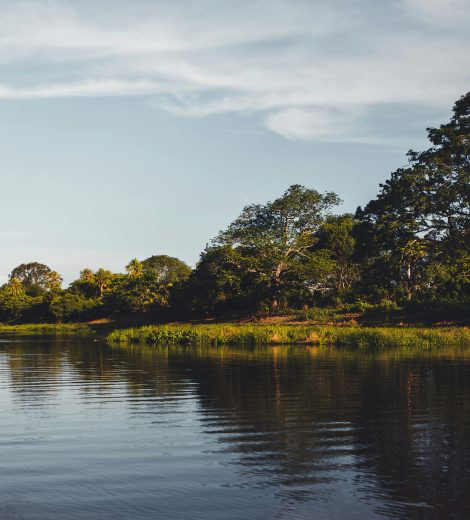
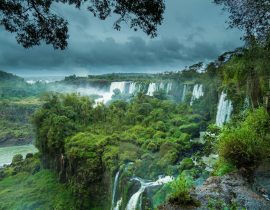
The Amazon is usually explored from Manaus, where the dark Rio Negro meets the sandy-coloured Solimões, with lodges and river boats offering guided walks, canoe trips and wildlife spotting. The Pantanal, a seasonal wetland in the centre-west, is one of the best places on the continent to see wildlife in the open, including caimans, capybaras, hyacinth macaws and, with luck, jaguars. On the border with Argentina, the Brazilian side of Iguaçu Falls gives a sweeping panorama of the cascades.
The coast offers endless variety: the colonial town of Paraty and the forested island of Ilha Grande, the protected archipelago of Fernando de Noronha, and the white dunes and seasonal freshwater lagoons of Lençóis Maranhenses in the north.
Planning your trip
Brazil rewards a relaxed, flexible approach. Regional climates differ, so the best time for the Pantanal is not the same as for the north-eastern beaches or the Amazon. Portuguese is the main language, and English is less common outside hotels and tourist services, so private guides make a real difference in rural areas. A specialist can help you combine two or three contrasting regions, for example Rio, Iguaçu and the Pantanal, without spending too much of your holiday in transit.
For a detailed month-by-month guide, read Quand partir au Brésil : le climat mois par mois.
Highlights
- Sugarloaf Mountain, Corcovado and the beaches of Rio de Janeiro
- Panoramic views of the falls from Brazil’s Iguaçu National Park
- River and forest excursions in the Amazon from Manaus
- Wildlife safaris in the Pantanal wetlands
- Colonial streets and Afro-Brazilian culture in Salvador’s Pelourinho
- Baroque churches in the hillside town of Ouro Preto
- Paraty’s cobbled lanes and the forested coast of Ilha Grande
- Dunes and seasonal lagoons of Lençóis Maranhenses
When to go & practical information
Best time to visit: There is no single best season for the whole country. Rio and the south-east are pleasant from around April to October, when it is less hot and humid. The Pantanal is best for wildlife in the dry season, roughly July to October, while the Amazon can be visited year-round with different experiences in high- and low-water periods.
Climate: Most of Brazil is tropical, while the far south has a temperate climate with cooler winters. Rio has hot, humid summers from December to March with heavy showers, and milder, drier winters. The Amazon is hot and humid all year, with river levels rising and falling dramatically between the wet and dry seasons.
- Currency: Brazilian real (BRL). Cards are widely accepted in cities; carry some cash for smaller towns and markets.
- Languages: Portuguese. English is spoken in many hotels but less widely elsewhere.
- Time zone(s): Several time zones; Rio de Janeiro, São Paulo and Salvador use Brasília Time (UTC−3), while the Amazon region is an hour or more behind.
- Getting around: Domestic flights are essential for covering long distances; private transfers and guides are recommended within regions.
- Good to know: Check vaccination advice with a travel health professional and entry requirements with official government sources well before travel.
Destinations in Brazil


8 journeys in Brazil



Plan your trip to Brazil
Tell us when you would like to go and what draws you to Brazil. We will suggest a route that fits.
Plan My TripFAQs about Brazil
Have more questions? Contact us.
Two weeks is a good length for a first visit, allowing time for Rio de Janeiro plus two other regions such as Iguaçu, the Amazon or the Pantanal. Because flights between regions can take several hours, it is better to choose a few areas well than to cover too many.
Carnival takes place in the days before Lent, so the dates change each year, usually falling in February or early March. Rio, Salvador, Recife and Olinda each celebrate in their own style. Accommodation fills early, so plan well ahead if you want to be there.
They offer different experiences. The Amazon is about immersion in dense rainforest and river life, while the open landscapes of the Pantanal usually make wildlife easier to see. If time allows, many travellers enjoy combining both.
It is not essential, but English is less widely spoken than many visitors expect. A few basic phrases are appreciated, and private guides and drivers make travel much smoother outside major hotels and tourist sites.

