
Torres del Paine
Torres del Paine National Park is a showcase of Chilean Patagonia, with granite towers, glaciers, turquoise lakes and wildlife such as guanacos and condors.
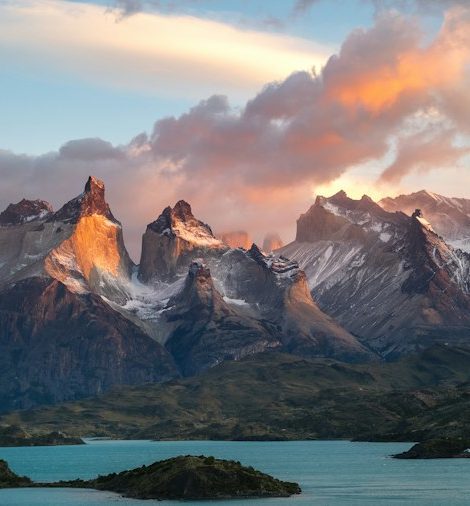
Torres del Paine National Park lies in the far south of Chile, between the Southern Patagonian Ice Field and the Patagonian steppe. Its centrepiece is the Paine massif, a compact group of mountains rising abruptly from the plains, crowned by three granite towers and the dark-capped peaks of the Cuernos del Paine. UNESCO recognises the area as a Biosphere Reserve.
The park suits walkers of every level. The best-known day hike climbs to the base of the towers, finishing at a glacial lake directly beneath them; it is a long, demanding day, with a steep final section over boulders. Experienced hikers come for the multi-day W Trek, usually done in four or five days, or the longer O Circuit around the whole massif. Overnight stays on these routes generally require advance reservations, so check current park regulations with CONAF, Chile’s national forest service, before planning.
You do not have to trek to enjoy the park. Scenic drives link viewpoints over Lake Pehoé, Lake Nordenskjöld and the Salto Grande waterfall, and short walks lead to the Mirador Cuernos and the shores of Lake Grey, where icebergs drift from Grey Glacier. Boat trips approach the glacier’s front. Wildlife is easy to see in the open terrain: herds of guanacos, lesser rheas, foxes and Andean condors are common, and pumas live in the park, with specialist guided tracking excursions available in some areas.
The usual gateway is Puerto Natales, a small town on the Última Esperanza Sound, usually reached by road from Punta Arenas. Within the park, accommodation ranges from refugios and campsites to lodges with guided excursions. Weather defines the experience: Patagonian winds can be extremely strong, and sunshine, rain and even snow can occur on the same day. Build in spare days, and pack windproof and waterproof layers.
Highlights
- The hike to the lake at the foot of the three granite towers
- Trekking the W route between valleys, lakes and glaciers
- Icebergs and glacier views at Lake Grey
- Views of the Cuernos del Paine across Lake Pehoé
- Spotting guanacos, condors and rheas on the open steppe
- The Salto Grande waterfall and Mirador Cuernos walk
When to go & practical information
Best months: November, December, January, February, March
Recommended stay: 3–5 nights

Plan your trip to Torres del Paine
Tell us when you would like to go and what draws you to Torres del Paine. We will suggest a route that fits.
Plan My TripFAQs about Torres del Paine
Have more questions? Contact us.
Not necessarily. Scenic drives, boat trips and short walks show off the park’s highlights without strenuous effort. The hike to the base of the towers and the multi-day treks, however, require good fitness and proper walking gear.
Three to five nights allow time for several excursions and a spare day for bad weather. Trekkers doing the W route usually need four or five days on the trail, plus travel to and from Puerto Natales.
Yes. Torres del Paine is regularly combined with El Calafate and the Perito Moreno Glacier in Argentina, linked by road with a border crossing. Check entry requirements for both countries with official sources before booking.


