

Chile: from desert stars to Patagonian ice
Long and narrow, Chile stretches from the Atacama Desert to the fjords and glaciers of Patagonia, with wine valleys, lakes, volcanoes and a lively capital in between, and Easter Island far out in the Pacific.
A trip to Chile takes you along one of the longest, narrowest countries on earth. Chile tours can start in a desert where rain is rare, pass through a capital framed by the Andes and wine valleys with a Mediterranean climate, and end among lakes, volcanoes, fjords and glaciers. The country runs for more than 4,000 kilometres down the Pacific coast but is on average less than 200 kilometres wide, so each region feels very different from the next. Far out in the Pacific, Rapa Nui (Easter Island) adds Polynesian culture and the famous moai. Good domestic flights make it easy to combine contrasts in a single journey.
Where to go in Chile
The Atacama Desert
In the far north, the Atacama Desert is a land of salt flats, high lagoons with flamingos, the El Tatio geysers and eroded valleys that turn red and gold at sunset. The oasis village of San Pedro de Atacama, at about 2,400 metres, is the usual base. The dry, clear air has made northern Chile an important centre for astronomy, and an evening of stargazing is one of the simplest pleasures of a visit. Further south, the Elqui Valley combines pisco distilleries with dark skies.
Santiago and Valparaíso
Santiago is the arrival point for most international flights and a relaxed, easy city to spend a couple of days in, with good museums, markets and restaurants, and views of snow-capped peaks on clear days. About an hour and a half away on the coast, Valparaíso climbs a series of steep hills above its port. Its historic quarter is a UNESCO World Heritage site, known for colourful houses, street art and old funicular lifts, with the beach town of Viña del Mar next door.
The central wine valleys
Chilean wine is a highlight in itself. The Casablanca Valley, between Santiago and the coast, is known for cool-climate whites such as Sauvignon Blanc. The Maipo Valley, on the edge of the capital, is associated with Cabernet Sauvignon, and the Colchagua Valley, about two and a half hours south, with full-bodied reds including Carménère. Staying a night or two at a vineyard hotel lets you enjoy tastings, long lunches and countryside walks without driving back to the city.
The Lake District and Chiloé
Around Puerto Varas and Pucón, the south becomes green: conical volcanoes such as Osorno and Villarrica rise above deep lakes, rivers and forests. It is a good region for gentle hikes, boat trips, rafting and hot springs. From Puerto Varas you can cross the Andes to Bariloche in Argentina by a combination of boats and short road sections. Just offshore, the island of Chiloé has its own culture, fishing villages, houses on stilts and wooden churches, several of which are listed by UNESCO.
Chilean Patagonia
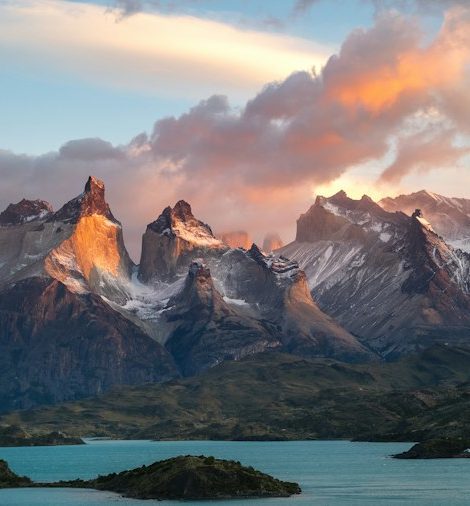
The far south is a world of fjords, ice fields and granite peaks. Its best-known destination is Torres del Paine National Park, which you can enjoy on day excursions from a lodge or on the multi-day W Trek. Further north, the Carretera Austral runs through remote valleys and small settlements. Our Patagonia guide covers the region on both sides of the border in detail, including how to combine it with El Calafate and El Chaltén in Argentina.
Rapa Nui (Easter Island)
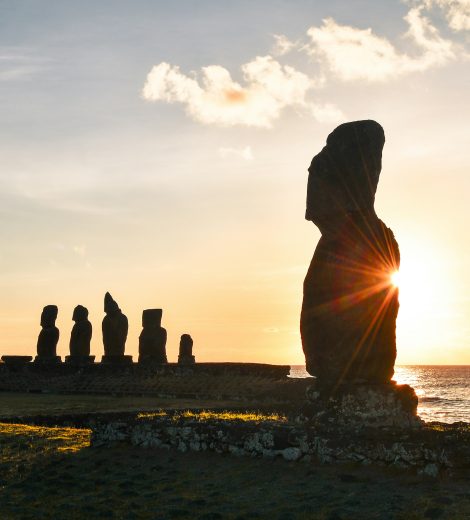
Around 3,500 kilometres west of the mainland, Rapa Nui is one of the most remote inhabited islands in the world. Most of it is protected as Rapa Nui National Park, a UNESCO World Heritage site, with hundreds of moai statues, the Rano Raraku quarry where they were carved, the crater of Rano Kau and the ceremonial village of Orongo. Flights from Santiago take about five hours, so allow at least three or four nights. Our Easter Island Short Break (4 days) is designed as an extension to a mainland trip.
Best time to visit Chile
Because Chile spans so many latitudes, the best time to visit Chile depends on where you go. Seasons are the reverse of Europe and North America. Patagonia is best in the southern summer, the centre is most pleasant in spring and autumn, and the Atacama and Easter Island can be visited all year. The months that suit a complete north-to-south trip are roughly October to April.
| Months | What to expect | Best for |
|---|---|---|
| December to February | Summer: long days in the south, warm and dry in the centre; occasional storms on the high Altiplano near the Atacama | Torres del Paine and the W Trek, the Lake District, beaches |
| March to May | Autumn: grape harvest in the wine valleys, autumn colours in the south, fewer visitors | Wine regions, Santiago, the Lake District, quieter Patagonia in March |
| June to August | Winter: cold nights in the desert, rain in the centre and south, snow in the Andes, many Patagonian services reduced | The Atacama, skiing near Santiago, Easter Island |
| September to November | Spring: flowers in the valleys, clear skies in the north, the Patagonian season opening | A combined trip of desert, wine and lakes |
For a detailed month-by-month guide, read Mejor época para viajar a Chile: clima mes a mes.
For the bigger picture across the continent, see our guide to the best time to visit South America.
How many days do you need? Sample Chile itineraries
- 9 to 10 days: Santiago, a stay in the Colchagua Valley and the lakes and volcanoes around Puerto Varas, as on our Chile Wine and Lakes trip (9 days). Food lovers can instead pair Santiago and Colchagua with Mendoza across the Andes on Food and Wine of Chile and Argentina (10 days).
- About 2 weeks: add the Atacama to the wine and lakes route with our Atacama Desert Short Break (4 days), or combine the desert with Patagonia and the Torres del Paine W Trek (8 days) for the full contrast of sand and ice.
- 3 weeks or more: join Chile with its neighbours. Andes and Patagonia: Peru, Chile and Argentina (20 days) links Machu Picchu, the Atacama and Patagonia, while Northern Argentina and the Atacama Desert (11 days) crosses the Andes from Salta and Jujuy.
- Adding Easter Island: plan three to four extra nights, flying from and back to Santiago.
Getting around Chile
Distances in Chile are long, and flying is the practical way to move between regions. From Santiago it is about two hours by air to Calama, followed by roughly an hour and a half by road to San Pedro de Atacama. Flights to Puerto Montt, the gateway to Puerto Varas, take under two hours, and flights to Punta Arenas around three and a half hours, with about three more hours by road to Puerto Natales and Torres del Paine. Within each region, roads are generally good and a private driver or guide lets you stop where you like.
Altitude is worth planning for in the north. San Pedro sits at about 2,400 metres, but excursions to the El Tatio geysers and the high lagoons reach more than 4,000 metres. Spending the first days on lower trips helps your body adjust. Our article on altitude in the Andes explains how to plan for it, especially if you are arriving from Peru or Bolivia.
Is Chile safe for travellers?
Most visits to Chile are trouble-free, and tourist regions such as the Atacama, the Lake District and Patagonia are generally relaxed. As in any large city, petty theft such as pickpocketing and bag snatching happens in Santiago and Valparaíso, especially in crowded areas, markets and on public transport. Keep valuables out of sight, carry only what you need for the day and use licensed taxis, ride apps or pre-arranged private transfers, particularly from the airport and at night.
Chile is an active earthquake and volcano zone, and buildings are designed with this in mind. Take note of tsunami evacuation signs on the coast and follow local instructions if a park or road is closed. In Patagonia and the mountains, the main risks come from weather and terrain, so hiking with a guide is sensible. Before you travel, check your government’s official travel advice for Chile and take out good travel insurance.
Why plan your Chile trip with a local specialist
Chile rewards good planning: flight connections, altitude, seasons and the time needed for each region all shape the route. A private, tailor-made trip lets you travel at your own pace, with transfers and logistics handled, local guides who know each area and a plan that can change if the weather does. We work with local partners on both sides of the Andes, which makes it easy to link Chile with Argentina or Bolivia in one journey, and every itinerary can be adjusted to your interests before you book.
Highlights
- Stargazing, geysers and salt flats in the Atacama Desert
- Hiking among granite peaks and glaciers in Torres del Paine
- The street art and hillside lifts of historic Valparaíso
- Wine tasting and vineyard stays in Casablanca, Maipo and Colchagua
- Volcanoes, lakes and hot springs in the Lake District
- Wooden churches and stilt houses on the island of Chiloé
- The moai and craters of Rapa Nui (Easter Island)
- Crossing the Andes by lake and road from Puerto Varas to Bariloche
When to go & practical information
Best time to visit: Patagonia is best from around November to March. Santiago, the coast and the wine valleys are most pleasant in spring (September–November) and autumn (March–May), the latter coinciding with the grape harvest. The Atacama can be visited year-round, although summer storms occasionally affect the high Altiplano.
Climate: Chile's climate shifts from arid in the north, through a Mediterranean central zone with warm dry summers and mild wet winters, to cool, rainy and windy conditions in the south. Seasons are the reverse of the northern hemisphere. In the Atacama, days are warm and sunny but nights are cold, and many excursions reach altitudes above 4,000 metres.
- Currency: Chilean peso (CLP). Cards are widely accepted in cities and tourist areas.
- Languages: Spanish, spoken quickly and with local slang; English is common in tourism but not everywhere.
- Time zone(s): Mainland Chile observes daylight saving time on dates set by the government; the Magallanes region and Rapa Nui follow their own times, so check before scheduling connections.
- Getting around: Domestic flights connect Santiago with the north and Patagonia; private transfers and self-drive are options within regions.
- Good to know: Chile has strict agricultural import controls for food and plant products, and you should check official entry requirements before booking.
Destinations in Chile

Easter Island (Rapa Nui)
Chile
Santiago
4 journeysAtacama Desert
4 journeys
Torres del Paine
3 journeys8 journeys in Chile



Plan your trip to Chile
Tell us when you would like to go and what draws you to Chile. We will suggest a route that fits.
Plan My TripFAQs about Chile
Have more questions? Contact us.
For a trip covering several regions, October to April works best. Patagonia is at its best from about November to March, Santiago and the wine valleys are most pleasant in spring and autumn, and the Atacama and Easter Island can be visited all year. See the seasonal table above for the details by region.
Allow nine to ten days for Santiago, the wine valleys and the Lake District, or for one region plus the capital. About two weeks lets you combine the Atacama with Patagonia or the lakes, and three weeks or more suits a trip that adds Easter Island or a neighbouring country.
Most visits are trouble-free, and the main tourist regions are generally relaxed. In Santiago and Valparaíso, watch for pickpockets in crowded places, keep valuables out of sight and use licensed taxis or private transfers. Check your government’s official travel advice before you go.
Yes, and the contrast is one of the joys of Chile. Domestic flights via Santiago connect the north and the far south, so a trip of around two weeks can include both, plus time in Santiago or the wine valleys.
Rapa Nui is reached by flights of about five hours from Santiago, so it needs at least three or four nights to justify the journey. Our Easter Island Short Break (4 days) is designed to slot in before or after a mainland trip.
San Pedro de Atacama lies at about 2,400 metres, and some excursions, such as the El Tatio geysers, go above 4,000 metres. Most travellers adjust well by starting with lower excursions and drinking plenty of water. Read our guide to altitude in the Andes for practical tips.


