Self-Drive or Private Driver in Argentina and Chile? A Region-by-Region Guide
Self-drive in Argentina and Chile works well in a few regions: the Salta and Jujuy loop, the Mendoza wine valleys and the Lakes District around Bariloche and Puerto Varas. For Patagonia, the high Andes and any route that crosses the border, a private driver-guide is usually the easier and safer choice, and many travellers mix the two.
An Argentina road trip sounds simple on the map, but distances are long, some roads are gravel and the weather can change fast. This guide compares both options region by region, covers the paperwork in general terms and shows how our private trips fit in. Our trips are built around private transfers and local guides, and we’re happy to advise if you’d like to add a few days of independent driving.
Self-drive or private driver: the short answer
- Self-drive suits you if: you’re a confident driver, you like stopping wherever you please, and your route stays on mostly paved roads within one country.
- A private driver-guide suits you if: you want to look at the scenery rather than the road, learn about what you’re seeing, and leave fuel, border formalities and timing to someone who knows them.
- Mixing both suits many travellers: a driver for the remote or high stretches, and a hire car for a few relaxed days in wine country or the lakes.
Where self-drive works well
Salta and Jujuy
The north-west is one of the classic road trips in South America. From Salta, a loop runs south through the red rock of the Quebrada de las Conchas to Cafayate, then north into the Quebrada de Humahuaca and the village of Purmamarca. Much of this is paved and traffic is light. Our Salta and Jujuy guide covers the main stops.
The catch is altitude. Side trips towards the salt flats of the Puna climb to around 4,000 metres on winding mountain roads, and some back roads are gravel. If you drive here, keep the high stretches for later in the trip, once you’ve adjusted. Our article on altitude in the Andes explains why.
Mendoza wine valleys
Around Mendoza, roads are generally good and the wineries of Luján de Cuyo and the Uco Valley are close together. The obvious drawback is wine itself: tastings and driving don’t mix, and Argentina is strict on drink-driving. Many visitors drive between bases and use a driver on tasting days.
The Lakes District
The Lakes are the most relaxed region for self-drive in both countries. On the Argentine side, roads around Bariloche and the Seven Lakes Route to San Martín de los Andes are paved and well signed. On the Chilean side, Puerto Varas makes an easy base for Lake Llanquihue, Frutillar and the slopes of the Osorno volcano.
One point to note: the classic Andean lake crossing between Bariloche and Puerto Varas is a passenger route by boat and bus, so it doesn’t suit a hire car. Driving between the two countries means a road pass and, as below, permission from the rental company.
The Carretera Austral, for experienced drivers
Chile’s Carretera Austral runs through remote valleys, forests and small settlements. Parts are paved, but long sections are gravel, services are sparse and some stretches rely on ferries. It rewards experienced drivers with time to spare. It isn’t a first road trip.
Where self-drive is harder
Patagonia: distance, gravel and wind
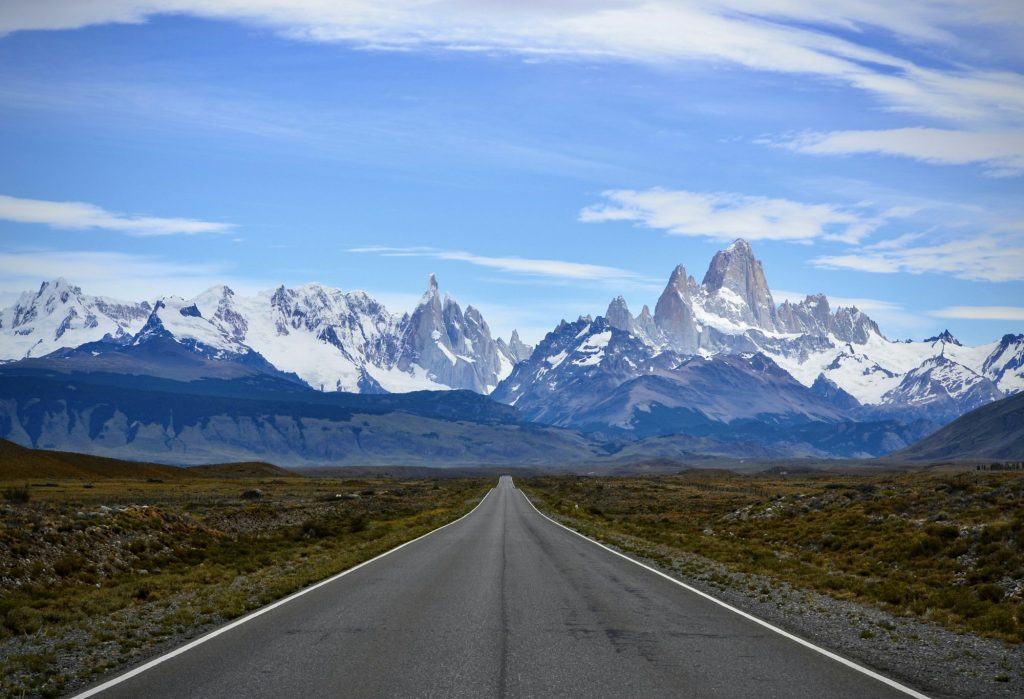
In southern Patagonia, towns are far apart and the steppe between them is empty. The drive from El Calafate to El Chaltén alone takes around three hours. Gravel roads, known as ripio, are common off the main routes; they chip windscreens and loosen tyres, and rental insurance often treats such damage differently. The wind is strong enough to push a car across the lane, and a door opened carelessly can be damaged.
Fuel stations can be a long way apart, so you fill up whenever you can. With a private driver, you simply watch the guanacos and condors go by.
Crossing the border
Many of the best routes cross between Argentina and Chile: El Calafate to Puerto Natales for Torres del Paine, Bariloche to the Chilean Lakes, or Salta to San Pedro de Atacama. Taking a rental car across the border needs written permission from the rental company, arranged well in advance, plus the right documents at the frontier. Not every car or company allows it.
Dropping a car in a different town from where you collected it usually adds a one-way fee, and leaving it in the other country tends to cost a lot more or isn’t possible at all. This is why so many self-drive routes become loops. Our guide on combining Argentina and Chile in Patagonia shows how the crossings fit together.
High roads in the north
The road from Jujuy across the Andes to San Pedro de Atacama climbs well above 4,000 metres, with few services and little shelter. Altitude affects drivers too, with headaches and tiredness, and snow can close high passes in winter. This is a stretch where we prefer a professional driver.
Night driving
Driving after dark isn’t advisable in rural areas of either country. Roads are often unlit, and cattle, horses and guanacos wander onto them. Plan days so that you arrive before sunset, which matters more in winter, when days are short in the south.
Region by region: self-drive or driver?
| Region | Self-drive? | Why |
|---|---|---|
| Salta and Jujuy loop (Cafayate, Purmamarca) | Yes, with care | Mostly paved and quiet; high side roads and some gravel |
| Mendoza wine valleys | Yes, between bases | Good roads; use a driver on tasting days |
| Bariloche and the Seven Lakes Route | Yes | Paved, well signed and short distances |
| Puerto Varas and the Chilean Lakes | Yes | Easy roads around Lake Llanquihue |
| Carretera Austral | Experienced drivers only | Long gravel sections, ferries and few services |
| El Calafate, El Chaltén and Torres del Paine | Driver recommended | Long distances, wind, gravel and a border crossing |
| Jujuy to San Pedro de Atacama | Driver recommended | Very high pass, remote road, border crossing |
| Atacama excursions from San Pedro | Driver-guide recommended | High altitude, early starts and unmarked tracks |
Paperwork, in general terms
To hire a car you’ll normally need:
- A valid driving licence from your home country, held for a minimum period set by the rental company.
- An International Driving Permit, which is often recommended and sometimes requested at police checks.
- Insurance, checking what it covers on gravel roads, windscreens and tyres, and whether it applies in the other country.
- Border permission from the rental company if you plan to cross between Argentina and Chile.
Rules and requirements change, and they differ between companies, so check them before you travel. If your trip with us includes some independent driving, we’ll confirm the current arrangements when we plan it.
What a private driver-guide adds
With a private driver-guide, the drive becomes part of the experience. You look out of the window instead of at the road. Your guide explains the geology of the gorges, the history of the villages and the life of the people who farm in the high valleys, and stops where the light is good or a condor is circling.
The practical side is handled too: fuel, timings, road conditions, park entrances and border crossings. On a route such as Northern Argentina and the Atacama Desert (11 days), which runs from Salta through Cafayate and Purmamarca and then across the Andes to San Pedro de Atacama, a driver takes the long, high crossing off your hands. On Patagonia on Both Sides (12 days), private transfers link El Calafate, El Chaltén, Puerto Natales and Torres del Paine, including the border.
Mixing both
You don’t have to choose one approach for the whole trip. A common pattern is a driver in Patagonia and the north, where distances and altitude are hardest, and a hire car in an easy region. For example:
- Follow Patagonia on Both Sides with private transfers, then fly to Mendoza and drive yourself between wineries, with a driver on tasting days. Mendoza Wine and the Andes (5 days) shows the route through Luján de Cuyo and the Uco Valley.
- Take Lakes and Volcanoes (9 days) with transfers and the lake crossing to Puerto Varas, then add a couple of days with a car around Lake Llanquihue.
- Start in Salta with a few days of self-drive around the valleys, then join a driver for the Quebrada de Humahuaca and the crossing to the Atacama.
For longer routes, our Argentina itinerary and Chile itinerary guides show how these regions connect by air and road.
How a private trip handles the driving
On a private trip with us, the long and complicated stretches are covered by private transfers and local guides, at a pace that suits you. We plan the days so that you arrive in daylight, build in time to adjust to altitude, and arrange the border crossings within our routes. If you’d like to drive part of the way yourself, we can suggest where it works best and plan the rest of the trip around it.
Frequently asked questions
In some regions, yes. The Lakes District around Bariloche, the Mendoza wine valleys and the Salta and Jujuy loop are popular with independent drivers. Patagonia is harder because of long distances, gravel roads, strong wind and few fuel stations.
Usually only with written permission from the rental company, arranged well in advance, and with the right documents at the border. Not every company or car allows it, and leaving the car in the other country is often expensive or not possible. Many travellers use private transfers for the crossing instead.
An International Driving Permit is often recommended alongside your home licence, and it can be requested at police checks or by the rental company. Requirements change, so check them before you travel. If your trip with us includes some driving, we confirm current rules when we plan it.
It can be for experienced drivers with plenty of time, but distances are long, much of the network is gravel and the wind is strong. Fuel stations can be far apart. For a first visit, private transfers between El Calafate, El Chaltén and Torres del Paine are simpler; see our Patagonia on Both Sides trip.
The Seven Lakes Route from Bariloche and the loop from Salta through Cafayate and Purmamarca are good choices. Roads are mostly paved and distances are manageable. Our Salta and Jujuy and Bariloche guides cover the highlights.
Our trips are built around private transfers and local guides, and we can advise if you’d like to add a few days of independent driving in an easier region such as Mendoza or the Lakes.