Chile Itinerary: 7 Days, Plus 10 to 14-Day Routes
The best Chile itinerary for 7 days pairs three days in and around Santiago with four days in the Atacama Desert. A one-week Chile itinerary like this gives you a capital city, a wine valley and the Pacific coast at Valparaíso, then salt flats, flamingo lagoons and geysers at dawn, with only one return flight.
With ten to fourteen days, you can add a second region: the wine valleys of Colchagua, the lakes and volcanoes around Puerto Varas, the trails of Torres del Paine, or the moai of Easter Island. Below we set out the 7-day plan day by day, then show how each longer version is built on our real trips, so you can see what fits and what to leave for next time.
Before you plan: Chile is long
Chile runs for more than 4,000 kilometres from the desert in the north to Patagonia in the south. That shapes every itinerary. Overland travel between regions takes days, so almost every route links them with domestic flights, and most of those flights go through Santiago.
- Santiago to Calama (for the Atacama): around two hours, then about an hour and a half by road to San Pedro de Atacama.
- Santiago to Puerto Montt (for Puerto Varas and the Lakes): around an hour and a half, then a short drive.
- Santiago to Punta Arenas (for Torres del Paine): around three and a half hours, then a few hours by road to Puerto Natales.
- Santiago to Easter Island: around five hours across the Pacific, usually only from Santiago.
A good rule is one region per three or four days. Each flight costs most of a day once you count transfers and check-in, so a 7-day trip has room for one flight out of Santiago and back, not three.
Chile itinerary 7 days: Santiago and the Atacama
This week combines the first three days of our Chile Wine and Lakes trip (9 days) with our Atacama Desert Short Break (4 days). It suits a first visit and works for most of the year, because the desert has dry weather in every season.
| Day | Plan | Overnight |
|---|---|---|
| 1 | Arrive in Santiago; a gentle afternoon in the city | Santiago |
| 2 | Santiago city tour: the historic centre, markets and a hill viewpoint | Santiago |
| 3 | Casablanca Valley wines and the coloured hills of Valparaíso | Santiago |
| 4 | Fly to Calama, drive to San Pedro; sunset in Moon Valley | San Pedro de Atacama |
| 5 | Salt flat flamingos and the altiplanic lagoons | San Pedro de Atacama |
| 6 | El Tatio geysers at dawn; free afternoon | San Pedro de Atacama |
| 7 | Morning in San Pedro; fly back to Santiago for your onward flight | — |
Santiago, Casablanca and Valparaíso
Santiago sits in a wide valley with the Andes rising behind it. Two days are enough for the old centre, the central market, a neighbourhood or two for dinner and a view over the city from one of its hills. On day 3 you head west towards the coast, stopping in the Casablanca Valley, known for cool-climate white wines, before reaching Valparaíso, a port city of steep lanes, murals and old funiculars.
Four days in the Atacama
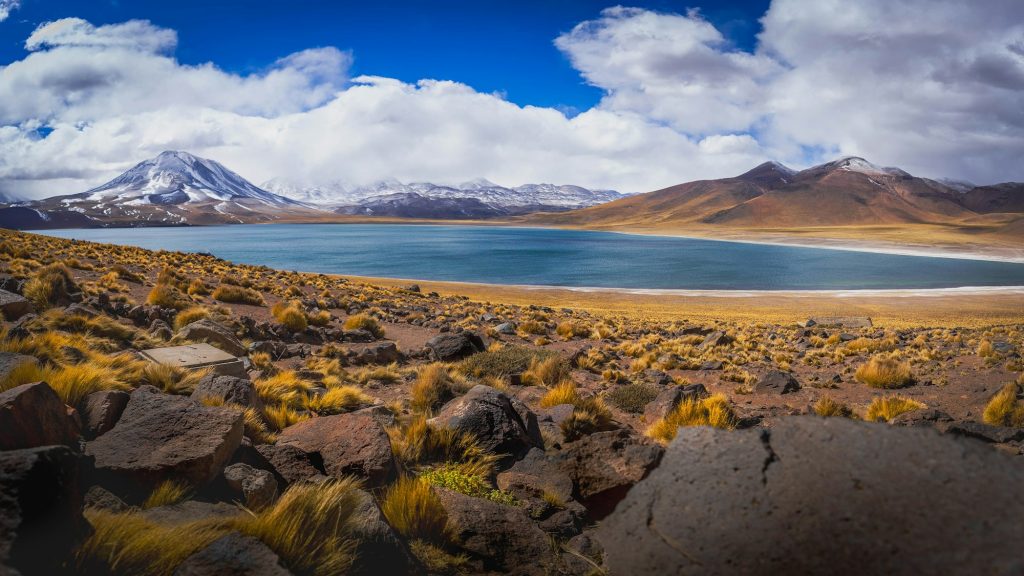
San Pedro de Atacama is a small adobe town at around 2,400 metres. The order of the days matters. You start low and easy, with a late-afternoon walk in Moon Valley, then visit the Salar de Atacama and the lagoons of Miscanti and Miñiques, which lie above 4,000 metres. The geysers of El Tatio, at around 4,300 metres, come on the third day, when your body has had time to adjust.
El Tatio means an early start, usually well before dawn, because the steam columns are tallest in the freezing air at first light. Bring a hat, gloves and warm layers. Drink plenty of water, go easy on alcohol for the first night and keep the first afternoon light. Most people feel the altitude only mildly at San Pedro, but it is worth taking seriously on the high excursions.
If you would rather have more time in the desert, drop Valparaíso and add a fifth night in San Pedro for the salt lagoons where you float, or Rainbow Valley.
Chile itinerary for 10 to 14 days
Each version below keeps the core of the 7-day plan and adds one region. The table gives the overview; the sections that follow explain how each one is built.
| Version | Length | Built on | Best months |
|---|---|---|---|
| Santiago, wine valleys and the Atacama | About 10 days | Chile Wine and Lakes (first part) + Atacama Short Break | Most of the year; harvest around March–April |
| Santiago, the Lakes and the Atacama | About 13 days | Chile Wine and Lakes + Atacama Short Break | Roughly October to April |
| Santiago, the Atacama and Torres del Paine | About 14 days | Atacama Short Break + Torres del Paine W Trek | Roughly October to April |
| Santiago, the Atacama and Easter Island | About 11 days | Atacama Short Break + Easter Island Short Break | All year |
Add the wine valleys: Colchagua
After Casablanca and Valparaíso, drive south to the Colchagua Valley for two nights among the vineyards. Colchagua is best known for full-bodied reds, and its estates are spread across a quiet, rural valley, so it feels very different from the city. Return to Santiago and fly north to the Atacama for the four desert days. That makes a relaxed trip of about ten days. Our Chile Wine and Lakes trip spends one night in Colchagua; our Food and Wine of Chile and Argentina (10 days) spends two, then crosses the Andes to Mendoza if you want to add Argentina instead of the desert.
Add the Lakes: Puerto Varas
Take the full Chile Wine and Lakes trip (9 days) and add the Atacama at the start or the end. From Colchagua you fly south to Puerto Varas, a lakeside town facing the Osorno volcano. Days there take in the Petrohué falls and Lake Todos los Santos, an optional day trip to the island of Chiloé and a free day around Lake Llanquihue. With the Atacama, it comes to about thirteen days and shows you both ends of the country in one trip.
| Days | Plan | Overnight |
|---|---|---|
| 1–3 | Santiago, Casablanca and Valparaíso | Santiago |
| 4 | To the Colchagua Valley | Colchagua Valley |
| 5–8 | Fly to Puerto Varas; Osorno, Petrohué, Chiloé, Lake Llanquihue | Puerto Varas |
| 9 | Fly from Puerto Montt to Calama, via Santiago | San Pedro de Atacama |
| 10–12 | Lagoons, salt flat and El Tatio | San Pedro de Atacama |
| 13 | Fly home via Santiago | — |
That ninth day is a long travel day, as there are usually no direct flights between the south and the north. Some travellers prefer an extra night in Santiago to break it up.
Add Torres del Paine
For walkers, the strongest pairing is the desert and Patagonia. Spend a night or two in Santiago and four days in the Atacama, then fly to Punta Arenas for our Torres del Paine W Trek (8 days). The trek follows the classic W route over four days: the base of the Towers, Los Cuernos, the French Valley and Grey Glacier, with nights in refugios or camps and a spare day in Puerto Natales for bad weather. In total it fills about fourteen days. If you prefer gentler walks, a few nights in a lodge with day hikes is another way to see the park; our Torres del Paine guide explains the options.
Add Easter Island
Our Easter Island Short Break (4 days) fits neatly after the Atacama. You return to Santiago, fly out to Hanga Roa and spend three full days among the moai: the quarry at Rano Raraku, the fifteen statues of Ahu Tongariki, Anakena beach and the crater of Rano Kau with the ceremonial village of Orongo. Flights to the island are limited, so we plan the rest of the trip around them. The Easter Island guide covers the island in more detail.
Seasons by region, in brief
Seasons in Chile are the reverse of Europe and North America, and each region has its own best months. Our best time to visit Chile guide goes month by month.
- The Atacama: good all year. Winter (June to August) brings clear days and very cold nights; in summer there can be occasional storms on the high Altiplano.
- Santiago and the wine valleys: warm, dry summers and mild springs and autumns. The grape harvest falls around March and April; winter brings some rain.
- The Lakes: best from roughly November to March, when days are long and the weather is more settled. Rain is possible at any time.
- Torres del Paine: the main season runs roughly from October to April. Many services are reduced in winter, and strong winds are common in summer.
- Easter Island: mild all year, with summer the busiest time.
This is why the 7-day Santiago and Atacama plan is so flexible, while trips with Patagonia or the Lakes work best between spring and autumn.
How we plan a private Chile itinerary
On a private trip, we fit the route to your dates and pace. We arrange the domestic flights and the transfers at each end, so long travel days run smoothly. In the Atacama, we order the excursions so you climb gradually, and a local guide drives you to the lagoons and geysers. We book refugios on the W Trek and your Easter Island visits, and confirm the current site arrangements when we book.
Frequently asked questions
Seven days is enough for two regions: Santiago with a day trip to Valparaíso, and four days in the Atacama Desert. Trying to add Patagonia or Easter Island as well would mean too many flights. With ten days or more, you can comfortably add a third region.
Three or four days is a good amount. It lets you start with gentle outings while you adjust to the altitude, then visit the high lagoons and the El Tatio geysers. Our Atacama Desert Short Break (4 days) follows this pattern.
Yes, and many travellers do. The two are at opposite ends of the country, so you fly between them, usually via Santiago. The best time for both together is roughly October to April, when the Patagonian season is open.
Two days are usually enough for the city itself, plus a day trip to Valparaíso or a wine valley. Many travellers also pass through Santiago between regions, so a night at the start or end of a trip is useful for connecting flights.
If the moai and Polynesian culture appeal to you, yes. Flights from Santiago take around five hours each way, so plan at least three nights on the island. Our Easter Island Short Break (4 days) can be added to most Chile routes.
For a route that includes the Lakes or Patagonia, roughly October to April is best. A trip that combines Santiago, the wine valleys and the Atacama works for most of the year, with March and April adding the grape harvest. See our best time to visit Chile guide for details.


