Best Time to Visit the Galápagos: Month-by-Month Guide
The Galápagos Islands are a year-round destination, and there is no bad month to go. In short: visit from roughly December to May for warmer water, calmer seas and sunshine, or from roughly June to November for cooler, misty days, richer marine life and lively seabird colonies.
Which season suits you depends on what you want from the trip. Snorkellers and anyone worried about seasickness often prefer the warm months, while keen wildlife watchers and walkers may enjoy the cooler ones just as much. The islands sit on the equator, so their seasons are shaped by ocean currents rather than by summer and winter, and the wildlife is there all year.
The Galápagos at a glance
- Warm season (roughly December to May): warmer air and water, usually calmer seas, sunny days broken by short, heavy showers, and greener islands after the rain.
- Cool garúa season (roughly June to November): grey, misty skies with light drizzle (the garúa), cooler water full of nutrients, active marine life and sometimes rougher seas.
- Changeover months: May and December often blend the two, with pleasant conditions and fewer crowds than the main holiday periods.
Month by month
The table gives the general pattern. Weather varies from year to year, and in some years the warm or cool conditions arrive early or linger longer than usual.
| Month | Weather and conditions | Good for |
|---|---|---|
| January | Warm and humid, sunny spells with short showers; water warming up, seas usually calm | Snorkelling, beaches, Christmas and New Year breaks |
| February | Among the warmest months; showers likely, warm water, calm seas | Snorkelling, swimming, green landscapes |
| March | Hot and humid, often the warmest water of the year; occasional heavy showers | Snorkelling, families, calm crossings |
| April | Still warm, rain easing; seas generally calm | Snorkelling, Easter holidays, birdlife |
| May | Changeover month: pleasant temperatures, fewer showers, water starting to cool | A good balance of weather and quieter sites |
| June | Garúa season begins: cloudier, cooler air and water, seas picking up | Marine life, walking, seabird colonies |
| July | Cool and often misty; water cooler and rich in life; busy with northern summer holidays | Wildlife watching, families on summer holidays |
| August | Among the coolest months; choppier seas at times, especially on open crossings | Marine life, seabirds; wetsuit recommended |
| September | Cool and grey, often the coolest water of the year; seas can be rough | Snorkelling with a wetsuit, quieter travel |
| October | Still cool but gradually brightening; seas begin to settle | Wildlife, walks, fewer visitors |
| November | Changeover month: warming air, calmer seas, mixed sun and cloud | Good all-round conditions, shoulder season |
| December | Warm season returns: sunnier, warmer water; very busy over Christmas and New Year | Snorkelling, beaches, festive breaks; book early |
The two seasons and the wildlife calendar
Warm season: roughly December to May
From around December, warmer currents reach the islands and the air and water both heat up. The sea is often in the low to mid-20s °C, comfortable for long snorkelling sessions, and the ocean is usually at its calmest, which makes boat crossings and cruise nights easier for anyone prone to seasickness. Skies are generally bright, interrupted by short, heavy tropical showers, often in the afternoon.
The rain turns the lowlands green and brings flowers to plants that look bare for much of the year. It is a good time for beach days on Santa Cruz, San Cristóbal and Isabela, and for travellers who want to spend as much time in the water as possible. Visibility underwater is often good, although the sea holds a little less plankton than in the cool months.
Cool garúa season: roughly June to November
From around June, the cool, nutrient-rich Humboldt Current dominates. The air turns cooler, a low layer of cloud often hangs over the islands and a fine mist called garúa settles on the highlands, keeping them green while the coast stays dry. The water drops to around 20 °C or a little lower, so a wetsuit is a good idea for snorkelling.
Those nutrients feed the whole food chain, which is why this season is so rewarding for marine life. Fish, sea lions and seabirds are busy feeding, and the cooler western waters around Isabela and Fernandina are especially rich. The trade-off is that seas can be choppier, particularly on longer open-water crossings around August and September. Cooler days also make walks on lava fields and volcano trails more comfortable.
Wildlife calendar
Galápagos wildlife is present in every season, and many species breed at different times on different islands, so there is always something happening. A few broad patterns are well established:
- Land birds and reptiles tend to breed in the warm season, when the rains bring plant growth, insects and food for their young.
- Sea turtles come ashore to nest on sandy beaches during the warm months, and the hatchlings emerge later in the season.
- Seabirds are especially active in the cool season, when the rich water provides plenty of fish. Courtship displays, such as the dance of the blue-footed booby, can be seen at various times of year.
- Waved albatrosses nest only on Española and are usually present from around April to December, leaving the island for the open ocean in the first months of the year.
- Galápagos penguins live in the cooler western waters all year and tend to be most active when the water is cool and food is plentiful.
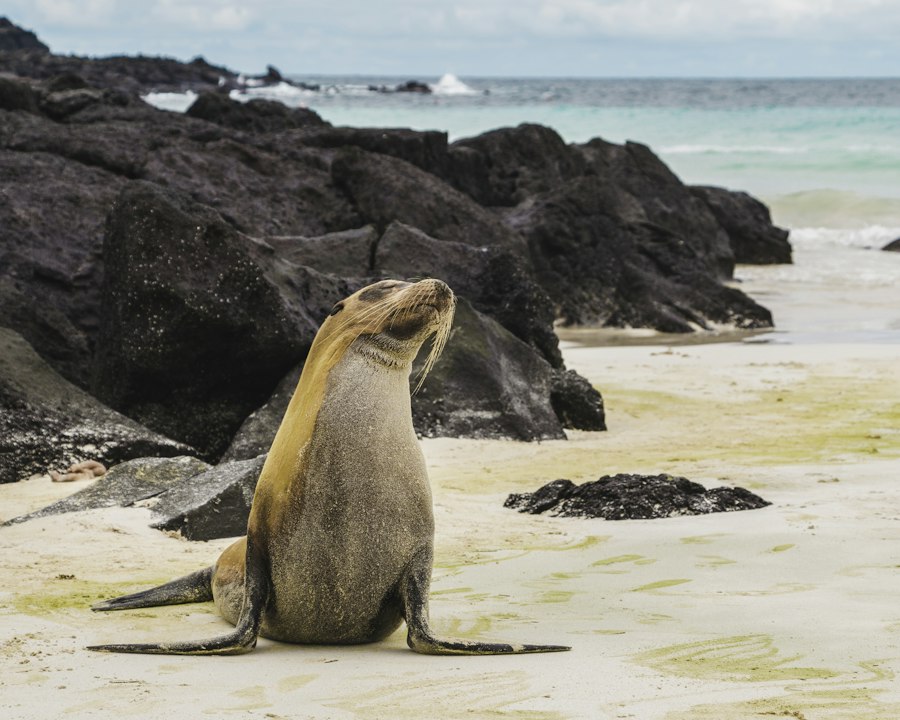
- Sea lions can be seen in every month, and their pups are a common sight on many beaches through much of the year.
Your naturalist guide will know what is happening on each island at the time of your visit, and we can shape a route around a particular species if it matters to you.
Festivals and busy periods
The Galápagos have no single large festival that sets the pace of travel; demand follows holiday calendars elsewhere. The busiest times are Christmas and New Year, Easter (in March or April, with dates varying each year) and the northern summer holidays from around late June to August. Carnival, in February or March depending on the year, also brings more travellers from mainland Ecuador.
Small expedition ships have only a few cabins, and the better island hotels are limited, so for these periods it is worth booking well ahead, often several months in advance. May, early June, October and November tend to be quieter, with good conditions and more choice of dates.
Which trip for which season
- Galápagos by Small Expedition Yacht with Quito (9 days): a small-yacht cruise with time in Quito. It suits the warm season best if you want calm seas on board, though in the cool season you are rewarded with busy marine life.
- Ecuador and the Galápagos: Andes and Islands (11 days): Quito and the Andes followed by island hopping between hotels. A good fit for roughly June to September, when the Ecuadorian highlands are generally drier, and sleeping on land avoids the rougher cool-season crossings at night.
- Galápagos, Machu Picchu and Lake Titicaca (21 days): the islands combined with Cusco, Machu Picchu and Lake Titicaca. The Peruvian Andes are driest from around May to September, which pairs well with the Galápagos cool season.
If you are unsure whether to sail or stay on land, our guide to Galápagos cruise or island hopping compares the two, including how each copes with the seas in different months.
Planning around the season
If you can be flexible, the changeover months of May, June and November are often the sweet spot: decent weather, fewer visitors and easier availability. Whatever the month, pack light layers, a windproof jacket for boat trips, strong sun protection (the equatorial sun is intense even under cloud) and swimwear. In the cool season, a wetsuit makes snorkelling far more enjoyable, and good operators usually provide one.
Most trips start or end in Quito, at around 2,850 metres, so if you are combining the islands with the Andes, read our advice on planning for altitude and allow an easy first day. A private, tailor-made trip lets us choose the order of your route around the season, for example islands on land when seas are rough, or more time in the water when it is warm.
For more on the islands, see our Galápagos Islands guide and our page on Ecuador. To compare seasons across the continent, read our guide to the best time to visit South America.
Frequently asked questions
There is no single best month, as the islands are good all year. Many travellers like May or November, changeover months with pleasant weather and fewer crowds. For the warmest water and calmest seas, aim for roughly February to April; for the richest marine life, roughly June to November.
The wetter period is the warm season, roughly December to May, but rain usually comes as short, heavy showers between sunny spells rather than all-day downpours. In the cool season, roughly June to November, there is little real rain on the coast, but a fine mist called garúa often covers the highlands.
Yes. Skies are greyer and the water is cooler, but the nutrient-rich sea supports busy marine life and active seabird colonies, and cooler days are pleasant for walking. A wetsuit makes snorkelling comfortable, and seas can be choppier, so island hopping is worth considering if you are prone to seasickness.
Seas are usually calmest in the warm season, roughly December to May. From about June to November, and especially around August and September, open crossings can be rougher. Our guide to Galápagos cruise or island hopping helps you choose between sleeping on board and staying on land.
The water is warmest from roughly January to April, often in the low to mid-20s °C, when many people snorkel without a wetsuit. From around June it cools to around 20 °C or a little lower, and a wetsuit becomes a good idea. Visibility and marine life vary by site in every season.
Waved albatrosses nest on Española and are usually present from around April to December. In the first months of the year they are mostly out at sea. Española is generally reached on a cruise, so plan your route accordingly.